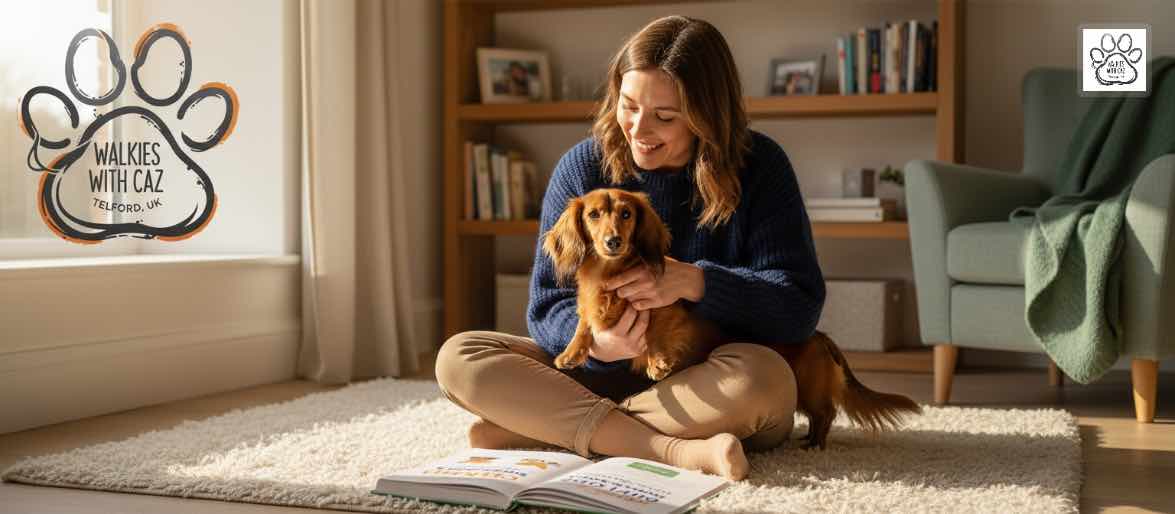
As a dedicated pet parent to my own sausage dog, Parker, I know exactly why these long-bodied, short-legged bundles of joy capture our hearts so completely. They are spirited, loyal, and full of personality. However, owning a Dachshund comes with a unique set of responsibilities, particularly regarding their delicate backs. Because of their elongated spines, our furry friends are genetically predisposed to Intervertebral Disc Disease (IVDD), a condition that can lead to pain, nerve damage, and even paralysis. My mission with Walkies with Caz is to ensure that every dog in Telford, Priorslee, and across Shropshire lives their best, most comfortable life. In this comprehensive guide, you will learn how to safeguard your sausage dog's spinal health through proper handling, tailored low-impact exercise, and proactive lifestyle changes.
By following the steps outlined in this guide, you will achieve a greater sense of peace of mind, knowing you are doing everything possible to prevent spinal injury. We will dive deep into the science of IVDD, the 'do's and don'ts' of daily play, and the best ways to keep your Dachshund fit without putting their vertebrae at risk. Whether you are a new puppy owner or have a senior sausage dog, these expert-backed tips are designed to keep those tails wagging and those backs strong for years to come.
Prerequisites for a Spine-Safe Home
Before we dive into the physical exercises and handling techniques, you need to ensure your home environment is set up for success. Minimizing the day-to-day impact on a Dachshund's spine is half the battle. If your dog is constantly jumping off the sofa or racing up steep stairs, they are at a much higher risk of a disc herniation. Here is what you need to get started.
Dog Ramps
Essential for providing access to sofas and beds without the need for high-impact jumping.
Body Harness
A well-fitted Y-shaped harness is vital to take pressure off the neck and distribute force across the chest.
Non-Slip Flooring
Rugs or runners on hard floors prevent 'the splits' which can cause sudden spinal torque.
First Aid Kit
Having a dog-specific first aid kit, and knowing I am dog first aid trained, provides an extra layer of security.
Step 1: Mastering Proper Handling and Lifting
The way you pick up and hold your sausage dog is perhaps the most critical daily interaction you have. Traditional lifting—grabbing a dog under their front armpits—is incredibly dangerous for a Dachshund. This method leaves their heavy rear end dangling, which puts immense 'shearing' force on the middle of the spine. We want to avoid any bowing or twisting of the back at all costs.
The Two-Handed Scoop
Always place one hand under the chest (behind the front legs) and the other hand supporting the rump. This keeps the spine level.
Support the Rear
Never let the back legs hang freely. The weight of the lower body must be fully supported by your arm or hand.
Prevent the 'Sausage Squirm'
Hold them close to your body to prevent them from wiggling or jumping out of your arms, which can lead to accidental drops.
Teach 'Wait' at Furniture
Train your dog to wait to be lifted or to use their ramp rather than taking the leap themselves.
In my experience as a professional dog walker in Telford, I often see pet parents accidentally allowing their Dachshunds to leap out of car boots or off high porches. This 'impact' is what leads to micro-traumas in the spinal discs. Think of the spine like a series of jelly doughnuts; if you squash them hard and fast, the jelly (disc material) can leak out and press on the spinal cord. By consistently using the 'scoop' method and using ramps, you are preserving the integrity of those 'doughnuts' for the long haul.
Step 2: Weight Management and Nutrition for Spinal Support
Every extra ounce your sausage dog carries is extra weight pulling down on their spine. Because of their long bridge-like structure, gravity is their constant enemy. A Dachshund should ideally have a visible waist when viewed from above and you should be able to feel their ribs easily without a thick layer of fat. Keeping your furry friend lean is the single most effective way to prevent IVDD.
Precision Feeding
Use a kitchen scale rather than a measuring cup for kibble. Even 10 extra grams a day can lead to weight gain over time.
Joint Supplements
Consult your vet about Glucosamine, Chondroitin, and Omega-3 fatty acids to support cartilage and disc health.
Healthy Low-Cal Treats
Swap high-fat processed treats for carrots, green beans, or blueberries during training sessions.
Caroline's Take 🐾
At Walkies with Caz, I treat every dog like they're my own Parker. When I'm out walking sausage dogs in Priorslee, I am hyper-vigilant about the terrain. We avoid steep inclines and focus on steady, level paths. I truly believe that 'Sausage dog training Telford' isn't just about 'sit' and 'stay'—it's about lifestyle training to protect their physical longevity. Being DBS checked and dog first aid trained means I'm always prepared, but my personal experience with the breed gives me that 'sixth sense' for when a Dachshund isn't feeling 100% in their back.
Step 3: Low-Impact Exercise and Safe Play
Exercise is vital for maintaining the core muscles that support the spine. A Dachshund with a strong 'six-pack' and sturdy back muscles is much less likely to suffer a spinal injury than one with weak muscle tone. However, the type of exercise matters immensely. We want to avoid 'high-impact' activities like jumping for frisbees, sharp turns during fetching, or rough wrestling with much larger dogs.
Steady Leash Walking
Focus on brisk, consistent walks on flat ground. Places like the Telford Town Park offer perfect paved paths for this.
Scent Work and Sniffaris
Engage their brain without the physical strain. Letting them use their nose is mentally exhausting and physically safe.
Controlled Play
If playing fetch, roll the ball along the ground rather than throwing it in the air to prevent jumping and twisting.
Hydrotherapy
Swimming or using an underwater treadmill is the gold standard for low-impact muscle building in Dachshunds.
During my pop-ins and walks, I always tailor the pace to the specific needs of the dog. For a sausage dog, this means no 'zoomies' on uneven turf and ensuring they don't over-exert themselves in a way that leads to fatigue. A tired dog is a clumsy dog, and clumsiness leads to injury. We aim for quality over quantity in every session.
The Sausage Dog Spine Safety Checklist
A daily and weekly guide to ensuring your Dachshund remains healthy and injury-free.
🐾 Daily Environment Checks
🐾 Physical Observation
🐾 Exercise & Handling
Step 4: Recognizing the Red Flags of IVDD
Even with the best care, IVDD can still strike. Early intervention is the difference between a full recovery and permanent disability. As pet parents, we must be 'spine-aware' and act immediately if something seems off. Never 'wait and see' with a Dachshund's back; if they are showing signs of pain, it is an emergency.
The 'Drunken' Walk
Ataxia, or hind-end weakness, often looks like the dog is swaying or 'walking like they're drunk.'
Shaking and Panting
These are primary signs of acute pain in dogs. They may also hold their head low or have a 'hunched' appearance.
Reluctance to Move
If your usually bouncy furry friend refuses to get out of bed or won't lift their head for a treat, take note.
Knuckling Under
If the dog's back paws flip over so they are walking on their knuckles, this indicates nerve interference.
Pro Tips for Long-Term Spinal Health
Maintaining a healthy sausage dog is a marathon, not a sprint. Consistency is key. Here are some quick stats and expert takeaways to keep in mind as you manage your dog's lifestyle in Shropshire.
Common Mistakes to Avoid
In my years of pet care, I've noticed a few common habits that pet parents unknowingly fall into which can jeopardize their dog's health. Avoiding these mistakes will put you ahead of the curve in Caring for Your Sausage Dog: A Guide to Spinal Health & Low-Impact Exercise.
- Allowing them to walk down steep stairs (Downwards motion is harder on the spine than upwards).
- Encouraging 'begging' or 'sitting pretty' (This puts the entire weight of the dog on the lower lumbar discs).
- Using extendable/flexi leads (The sudden 'jolt' when the lead runs out can cause whiplash or spinal trauma).
- Overfeeding 'just a little bit' (Obesity is the number one controllable risk factor for IVDD).
- Roughhousing with larger, high-energy dogs who might step on or pin the Dachshund's back.
- Ignoring a 'minor' yelp (Small signs of pain often precede major disc ruptures).
Frequently Asked Questions
Can my sausage dog ever use stairs?
Ideally, no. While a few shallow steps occasionally might be fine, repetitive use of standard household stairs puts significant strain on their long spine. It is always safer to use a ramp or carry them (using the correct technique!) to prevent cumulative damage.
Are all Dachshunds guaranteed to get IVDD?
No, it's not a guarantee, but they are genetically predisposed. By maintaining a lean weight, using a harness, and avoiding high-impact activities, you can significantly reduce the risk and severity if a disc issue does occur.
Is a harness really better than a collar for a sausage dog?
Yes, 100%. Collars put all the pressure on the cervical spine (the neck). A Y-shaped harness distributes that pressure across the chest and ribcage, which are much better suited to handle the force, especially if the dog pulls on the lead.
What is the best low-impact exercise for a Dachshund in Telford?
Scent work is fantastic! It engages their natural hunting instincts without physical strain. Controlled, on-lead walks on flat surfaces like the Priorslee Flash or local footpaths are also excellent for building supporting muscle.
Conclusion: Commitment to Their Care
Caring for your sausage dog's spinal health is a lifelong commitment, but it is one that pays off in countless cuddles and happy memories. By implementing these low-impact exercise routines, mastering the correct way to handle your furry friend, and keeping a watchful eye on their weight, you are providing them with the best possible quality of life. Remember, your Dachshund relies on you to be their advocate and protector. Whether it's choosing a ramp over the stairs or a harness over a collar, every small decision helps preserve their mobility.
If you're in the Telford, Priorslee, or Shropshire area and need a dog walker who understands the specific needs of long-backed breeds, I am here to help. I bring my professional training and personal experience with Parker to every walk and pop-in, giving you the peace of mind that your pet is in the safest possible hands.
🐕 Professional Care for Your Sausage Dog
Looking for a dog walker who understands spinal health? Let Walkies with Caz provide the tailored, low-impact care your Dachshund deserves. DBS checked and dog first aid trained.
Book Your Free Consultation